
Last verified: March 2026
Cannabis Is Illegal in Japan
All forms of cannabis — possession, use, cultivation, sale, and import — are criminal offenses in Japan. This page is for educational purposes only. It does not constitute legal advice. Anyone with questions about Japanese drug law should consult a qualified Japanese attorney.
The Bottom Line
Cannabis is completely illegal in Japan for recreational use. As of December 12, 2024, even the act of using cannabis — not just possessing it — is a criminal offense punishable by up to 7 years in prison. There are no exceptions for tourists, no tolerance for small amounts, and no distinction between cannabis and "hard drugs" in Japanese law or culture.
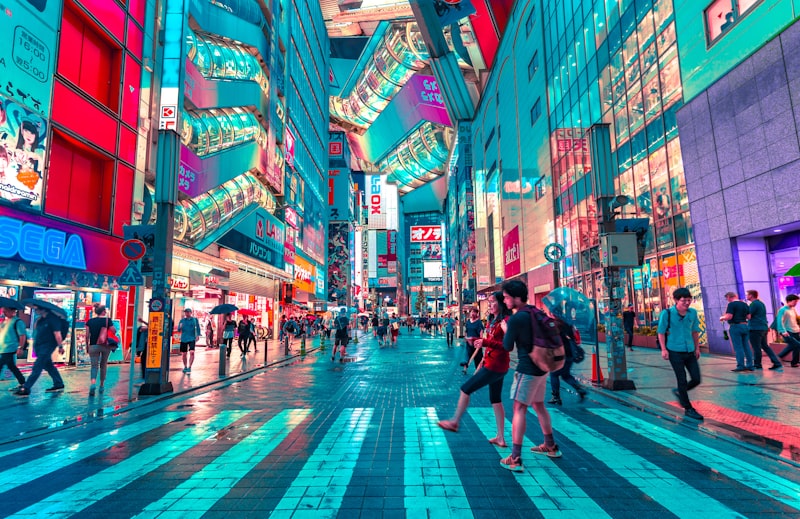
Japan's criminal conviction rate exceeds 99%. Once arrested for a drug offense, the outcome is nearly certain. Approximately 6,000 cannabis-related arrests occur each year, and the December 2024 amendments were specifically designed to strengthen enforcement.
Cannabis remains classified alongside heroin, cocaine, and morphine under Japan's Narcotics and Psychotropics Control Act following the December 2024 amendments.
Ministry of Health, Labour and Welfare (MHLW)
What Is Illegal
The following activities are criminal offenses under Japanese law, carrying severe penalties for both Japanese nationals and foreign visitors:
- Possession: Holding any amount of cannabis — including flower, concentrates, or edibles — is punishable by up to 7 years imprisonment. There is no minimum quantity threshold; even trace amounts can result in prosecution.
- Use/consumption: As of December 12, 2024, the act of consuming cannabis is now explicitly criminal, punishable by up to 7 years imprisonment. Previously, only possession was criminalized, not use itself. A positive urine test for THC metabolites constitutes sufficient evidence for arrest.
- Cultivation: Growing cannabis plants — even a single plant — is punishable by up to 7 years imprisonment (10 years if for profit, plus fines up to ¥3 million / approximately $20,000 USD).
- Import/export: Bringing cannabis into or out of Japan carries up to 7 years imprisonment (10 years if for profit). Japan Customs specifically screens for cannabis products at all international airports and seaports.
- Sale/transfer: Selling or giving cannabis to another person is punishable by up to 7 years imprisonment (10 years if for profit).
- Cannabis edibles from abroad: Japan Customs explicitly warns travelers about cannabis-infused cookies, butter, cakes, and medicines. These are treated identically to raw cannabis under the law.
Japan Customs warns all incoming passengers: "Bringing in narcotics, cannabis, stimulants, etc. into Japan is prohibited. Cannabis cookies, cannabis butter, cannabis cakes, medicines made from cannabis are also subject to regulations."
Japan Customs — Passenger Information
What Is Legal (Very Narrow Exceptions)
Japan permits a small number of strictly regulated exceptions:
| Exception | Conditions |
|---|---|
| CBD products | Legal only if derived from hemp stalks or seeds AND meeting Japan's ultra-low THC limits: 10 ppm for oils/powders, 0.1 ppm for aqueous solutions, 1 ppm for other categories. Must be tested by ISO 17025-accredited laboratories. |
| Hemp seeds as food | Legal. Found in shichimi togarashi spice blend and health food stores. Seeds must be heat-treated to prevent germination. |
| Industrial hemp fiber | Legal under a strictly regulated Class I Cannabis Grower License issued by the prefectural governor. Licensed growers face ongoing monitoring and reporting requirements. |
| Cannabis-derived pharmaceuticals | Now legally possible under the December 2024 amendments through Japan's standard drug approval process (PMD Act). No products have yet received full market approval as of March 2026. Epidiolex (CBD epilepsy medication) was designated an orphan drug in April 2024. |
Key Statutes
Japan's cannabis legal framework spans three primary laws, restructured significantly by the December 2024 amendments:
| Law | Japanese Name | Scope |
|---|---|---|
| Law on Cannabis Cultivation Regulation (formerly Cannabis Control Act) | 大麻取締法 (Taima Torishimari Hō) | Cultivation licensing for industrial hemp. Renamed in December 2024 to reflect its narrowed scope — now focused on cultivation regulation rather than broad prohibition. |
| Narcotics and Psychotropics Control Act (NPSCL) | 麻薬及び向精神薬取締法 | Now governs THC, cannabis products, and all use/possession penalties. THC was reclassified under this act in December 2024, placing it alongside heroin, cocaine, and morphine. |
| Pharmaceuticals and Medical Devices Act (PMD Act) | 医薬品医療機器等法 | Framework for cannabis-derived pharmaceutical development, clinical trials, and market approval. Enables the new medical pathway opened by the 2024 amendments. |
The Cannabis Control Act was renamed the "Law on Cannabis Cultivation Regulation" to reflect its narrowed scope, while THC and its hallucinogenic isomers were moved to the Narcotics and Psychotropics Control Act.
DIA Global Forum — Cannabis-Derived Drugs in Japan
Penalty Summary
All cannabis offenses carry severe criminal penalties. The distinction between "non-profit" and "for-profit" offenses significantly increases maximum sentences:
| Offense | Non-Profit Penalty | For-Profit Penalty |
|---|---|---|
| Possession | Up to 7 years imprisonment | Up to 10 years + ¥3 million fine (~$20,000) |
| Use/consumption | Up to 7 years imprisonment | Up to 10 years + ¥3 million fine |
| Cultivation | Up to 7 years imprisonment | Up to 10 years + ¥3 million fine |
| Import/export | Up to 7 years imprisonment | Up to 10 years + ¥3 million fine |
| Sale/transfer | Up to 7 years imprisonment | Up to 10 years + ¥3 million fine |
Social Consequences Often Exceed Legal Penalties
In Japan, a cannabis arrest typically results in immediate job termination, public naming in media, academic expulsion, and permanent damage to family and community relationships. For foreign nationals, conviction leads to deportation after serving the sentence and a ban on re-entering Japan — often permanent. Japan's "hostage justice" detention system allows police to hold suspects for up to 23 days before formal charges, with limited access to legal counsel.
How This Compares
Japan's cannabis laws are among the strictest in the developed world and are notably harsher than most comparable economies:
- United States: Cannabis is legal for recreational use in 24 states and medical use in 38 states. Federal law still classifies it as Schedule I but enforcement against state-legal activity is minimal.
- Canada: Fully legalized nationwide since 2018 for recreational and medical use.
- Germany: Partially legalized for personal use in 2024 (up to 25g in public, 50g at home).
- Thailand: Briefly decriminalized in 2022 but re-criminalized in 2025 — a reversal Japan's policymakers cite as validating their conservative approach.
- South Korea: Most similar to Japan — strict prohibition with a cautious pharmaceutical-only medical pathway (first in East Asia, 2018).
- Singapore: Even stricter — death penalty possible for trafficking large quantities.
Japan is unique in moving to tighten penalties while most developed nations are relaxing them. The December 2024 criminalization of cannabis use makes Japan one of the few countries where consuming cannabis — even without possessing it — is itself a crime.
Explore Japan Cannabis Law
Dive deeper into specific topics:
Official Sources
- Ministry of Health, Labour and Welfare — Cannabis Law Amendment
- Japan Customs — Passenger Drug Warning (PDF)
- DIA Global Forum — Cannabis-Derived Drugs in Japan
- Mori & Partners — Understanding Japan's Cannabis Law Reforms
- Cannabis in Japan — Wikipedia (comprehensive overview)
For in-depth cannabis education, dosing guides, safety information, and research summaries, visit our partner site TryCannabis.org
Related on this site: Japan 2024 Cannabis Reform, Medical Cannabis in Japan, Japan Cannabis Penalties.